

Our story
Why we built Tiplor
Built in the Beaches, for the rooms that gave us the idea.
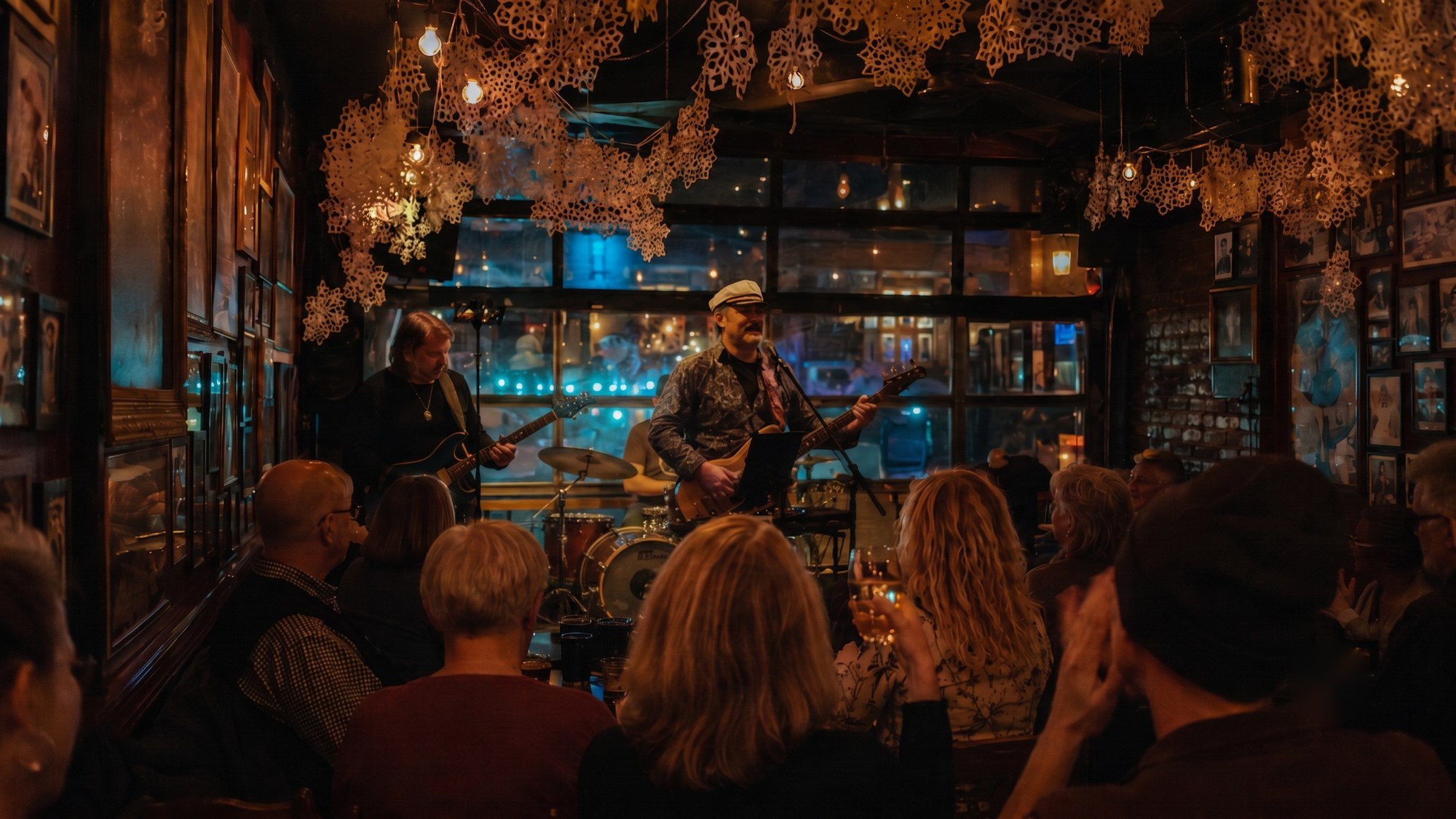
It started at Castro's Lounge.
The band would finish a set, the room would erupt in applause, and a battered tip jar would begin making its way from table to table. That was the moment the problem became obvious. People wanted to tip. They meant to tip. But they'd reach into their pockets already knowing what they'd find: nothing. Cash had stopped living there a long time ago.
So the same scene kept playing out. Someone would skip the jar and feel a little guilty. Or turn to a friend and say, "Throw twenty in for both of us — I'll get you back." The intention was always there. The way to act on it had quietly disappeared.
Shawn lived it firsthand — at one Beaches show, the band finished a set, the tip jar came around, and he had to borrow money from a friend just to put something in.
After a Beaches summer of packed-house shows from local acts like Frankie Dee & Sugar Rush and Red Door Relic, the question got too obvious to ignore: there had to be an easier way. Why isn't there a QR code on the tip jar?
Scan. Tap Apple Pay or Google Pay. Done. The band gets appreciated before they've finished packing up. That simple observation became Tiplor.
And it wasn't just Castro's. One recent night at the Linsmore Tavern, a Pearl Jam cover band was so good you'd have handed them twenty bucks on instinct if there'd been a way to do it without leaving the room. A QR code on the table would have closed that gap in a second.
Tiplor started in the Toronto Beaches, where we'd watch live music. The band would finish, the tip jar would come around — but many didn't have cash on them including me. The idea was simple: why not put a QR code on the tip jar and connect it directly to the band so people can still show appreciation in the moment. Scan, tap, done. What Tiplor's really about is making sure the appreciation people feel in a live room in the moment actually reaches the artists on stage.
Peter called it found money — appreciation that's always there in a live room, just trapped behind cash people don't carry anymore. Capturing it is the whole point.
The team behind Tiplor
Tiplor was built in the Beaches by a small team that knew the live-music world from different angles. Peter Quay brings years in live entertainment — from concert booking at Labatt's Blue Live (Kingswood at Wonderland, now the RBC Amphitheater) to a nine-year run with World Vision's 30 Hour Famine, working alongside artists like Bono, Sarah McLachlan, Tom Cochrane, and the Tragically Hip. Shawn O'Quinn brings a background in startups and digital marketing — spanning auto, real estate, and e-commerce — and turned the founding Castro's-Lounge observation into a working platform inside a week of the first conversation.
From that first discussion forward, the fingerprints of the team have been on every part of it. The first artists on the platform were East End acts. The first venues were the rooms we already walked into on weekends. The product was shaped by what those rooms actually need — not by an abstract idea of what a tipping app should be.
What it actually does
Tiplor is a digital tip jar for live music. Every artist gets a permanent URL — tiplor.com/@theirname — and a unique QR code. Display it anywhere fans can see it: on stage, on a sticker, on a table tent, on a phone screen. Fans scan, tap an amount, and pay with Apple Pay, Google Pay, or any card.
About ten seconds. No app. No signup. No card reader. Eighty-five percent of every tip goes directly to the artist, paid out daily via Stripe. We charge a flat 15% that covers Stripe's processing costs and ours — no setup fees, no monthly fees, no minimums. That's the whole thing.
What it's really about
Live music is one of the things that keeps a neighbourhood alive. A great Sunday set at a Beaches pub lands deep in your bones and stays with you all day. Venues that host that music draw people, fill rooms, lift streets. The artists making it deserve to walk away with more than applause.
That's what the strap line points at — Love It Live™. Live music as something worth showing up for, worth supporting, worth keeping alive.
It's also why we built the platform to do more than process payments. Artists can use a slider on their profile to allocate any percentage of incoming tips to a charity — 50% to a food bank tonight, 100% to a benefit concert next month. A live progress bar shows the room how close they are to the goal. The tip becomes a small act of community, not just a transaction.
Where we are now
We're early, and we're starting close to home. Castro's Lounge, The Gull & Firkin, Feathers, and The Hideout are among the rooms working with Tiplor in the East End. At Feathers, open-mic hosts Samara and Jen have built real momentum this year — running a unified venue tip link that pools the night's tips and distributes them across the rotating roster of performers. Local acts including Dancebeatles and Dead Gratitude are on the platform.
Artists have signed up across Canada, the US, the UK, Ireland, Australia, and beyond — but the centre of gravity is still Toronto, and especially the East End. That's where the idea came from. That's where we still test every feature, on real performers, in real rooms, before it ships anywhere else.
What's next
The next chapter is being shaped by the people already using it. This July, we're doing exactly that at the Beaches International Jazz Festival — a community-supported tipping channel that gives fans a direct way to help keep a free festival free. It's the biggest deployment yet, and the demand we take most seriously is the kind that came from the artists on the small stages asking for it on the big ones.
We started with one QR code on one tip jar at Castro's Lounge. The infrastructure scales to a multi-stage festival across a 2km stretch of street. Same mechanic, bigger impact.
Take the most universal moment in live music — the one where the band finishes a set and the room goes quiet for a beat before the applause — and make sure the appreciation in that pause actually reaches the people on stage.
If you're an artist, a venue, an event organizer, or just someone who's tipped a busker in cash and wanted a better way — Tiplor is the better way.

— The Tiplor team